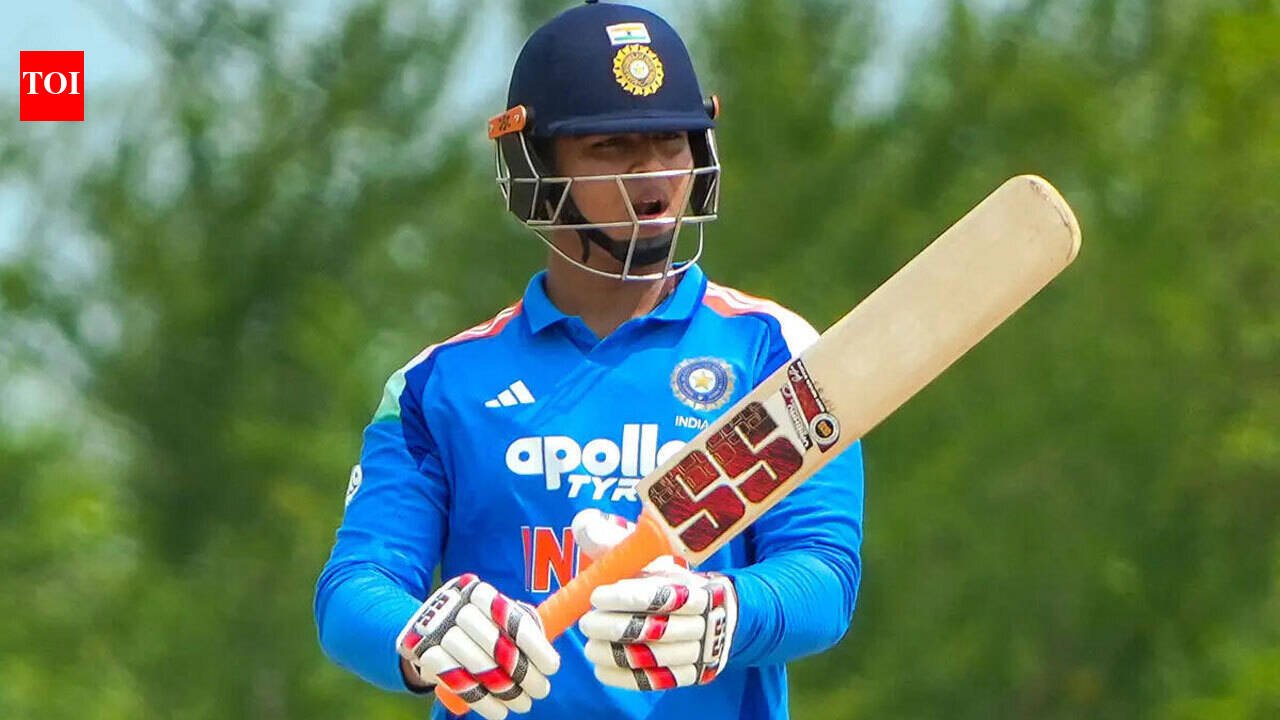
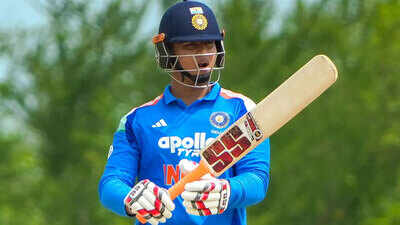
In Belfast this week, men with measuring tapes have been solving a small architectural problem. India needed a second dressing room. Not the usual communal affair where grown professionals peel off their pads and discuss their hamstrings, but a separate one, because one of the cricketers India has brought to Ireland is fifteen years old, and the law takes a dim view of a minor sharing a changing space with adult men.So they built him a room. Pause on that, because it is the whole story compressed into an act of carpentry. The richest board in the sport has commissioned a private chamber for a boy it has not yet decided to pick. The robes are being stitched while the selectors are still, behind closed doors, arguing about whether the coronation should happen at all. Vaibhav Sooryavanshi, of Tajpur in the Mithila region of Bihar, may or may not make his India debut against Ireland tomorrow. He may walk out and become, at fifteen, the youngest man ever to play for India, demoting Tendulkar to second place in a record held since 1989, back when this boy’s parents were themselves children. Or he may sit in his lovely new room and watch, because the selectors will have done the cold arithmetic and decided the side that just won the T20 World Cup does not, on a damp evening in Belfast, urgently require disturbing. Both are true at once, and holding both is the only honest way to look at him.Consider what he is. The IPL numbers read like a misprint: 776 runs, a strike rate of 237, Gayle’s record for sixes in a season broken by a child who was not alive when the league began. The cricket men, professionally allergic to hyperbole, have reached for words they normally keep locked away. Bat speed almost previously unseen. A throwback to grainy footage of Sobers. Grown men who have given their lives to bowling left, in one lovely phrase, bemused and helpless. This is not the language of promise. It is the language of arrival.
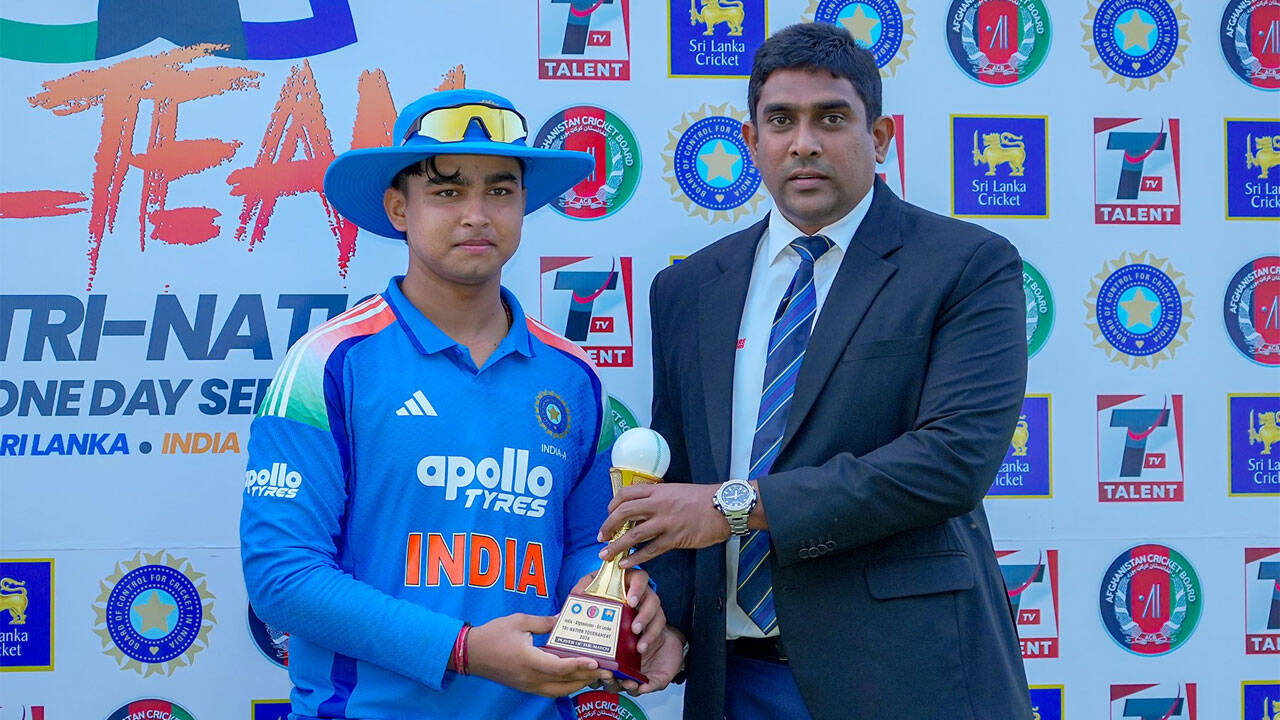
Vaibhav Sooryavanshi with the Player of the Match trophy after his explosive 94 in the Tri-Nation Series final in Sri Lanka. (Pic credit: BCCI)
And yet, cricket is not a meritocracy in the way the posters insist; it is a meritocracy complicated by arithmetic. India open with Sanju Samson and Abhishek Sharma, who are not problems to be solved but men who have earned their places, one of them the Player of a tournament India just won. Shreyas Iyer, the new captain, wants the middle. The maths has no spare chair. To seat the prodigy you must un-seat someone who has done nothing wrong except not be a sensation, and there is something almost cruel in the way excellence can be quietly insufficient when a phenomenon walks in.This is the part the dream merchants leave out. We like our talent stories to run downhill, gathering speed: the small town, the bat, the records, the inevitable blue jersey, cue strings. But the interesting thing about Sooryavanshi’s week is not the inevitability. It is the friction. He is at once too good to leave out and too disruptive to put in, and how that tension resolves will tell us less about him than about the people holding the pen over the team sheet. The boy has done his part. He has, in the only sentence the chairman of selectors could manage, picked himself. What remains is whether the grown-ups have the nerve to act on it, or whether they will wait, prudently, for a softer occasion against a kinder opponent.I find I do not much mind which way it goes. If he plays and flays the Irish attack, we will have witnessed something. If he waits, the room they built will hold its breath a few more days, and the record will keep, as records do. What I mind is the flattening of it into fairy tale, the reduction of a strange and unresolved moment into the usual syrup about dreams coming true.A boy from Bihar has frightened a board into building him a room. Whether he is allowed to sit in it tomorrow is, in the end, a smaller question than the one his arrival has already answered: that the next of them, the faster-stronger-younger we keep promising, is not coming. It is here, fifteen years old, padded up, waiting on a decision that should have been beneath it.